Top Distributor Busduct Types for Efficient Power Distribution Solutions?
In the ever-evolving landscape of power distribution, the importance of Distributor Busduct systems cannot be overstated. According to a recent industry report by Global Market Insights, the market is expected to witness a growth rate of over 6% annually through 2026. This trajectory is indicative of a trend toward more efficient and reliable electrical solutions.
Industry expert Dr. Michael Turner emphasizes, “The right Distributor Busduct can significantly enhance system reliability and reduce installation costs.” With various designs available, each type of busduct provides unique benefits tailored to different applications. These factors are crucial for engineers and project managers when selecting the most efficient option for their needs.
However, not all Distributor Busduct systems are created equal. Some may face challenges regarding heat dissipation or physical space constraints. Addressing these issues can impact long-term performance. A well-informed choice will maximize efficiency and safety in power distribution networks, ultimately leading to greater advancements in the electrical infrastructure sector.

Overview of Busduct Systems in Power Distribution
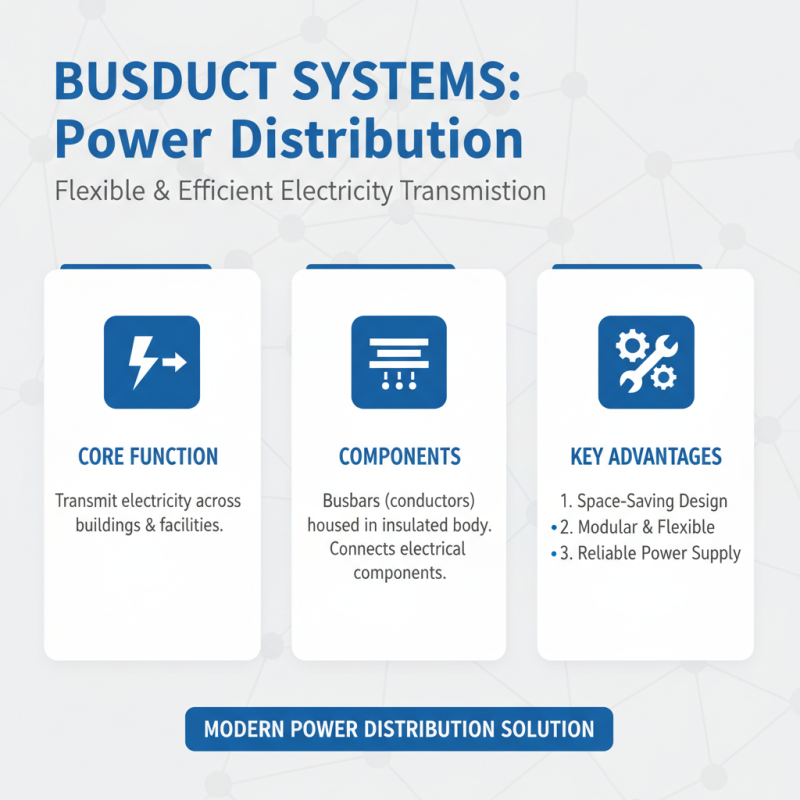
Busduct systems are crucial for modern power distribution. They offer a flexible solution for efficiently transmitting electricity across buildings and facilities. These systems consist of busbars housed in an insulated body, which connects various electrical components. The compact design saves space, making them an ideal choice for tight installations.
Choosing the right busduct type is essential for optimal performance. Different configurations, such as plug-in busducts and rising busducts, cater to specific needs. Plug-in busducts allow easy connection to multiple feeders. Rising busducts, on the other hand, transport power vertically, making them suitable for high-rise buildings. However, each type presents unique challenges. Improper installation or inadequate sizing can lead to performance issues.
Installation requires careful planning and expertise. Engaging with experienced professionals ensures the system meets all safety standards. Maintenance also plays a vital role in ensuring longevity. Regular inspections can help identify wear or potential failures. Ultimately, understanding the intricacies of busduct systems is key to effective power distribution in any facility.
Key Types of Busduct: Comparing Designs and Applications
Busduct systems are vital for efficient power distribution in industrial settings. Their design affects not only energy efficiency but also safety. Key types include air-insulated, gas-insulated, and busway systems. Each design serves specific applications, providing unique advantages.
Air-insulated busducts are prevalent in large facilities where flexibility is crucial. They offer cost-effective solutions while allowing easy access for maintenance. According to industry data, air-insulated systems can reduce installation time by 30%.
Gas-insulated systems excel in environments with space constraints. They maintain a compact form factor, maximizing facilities' usable area. Studies indicate that gas-insulated busducts can have a lifespan of up to 30 years with minimal maintenance.
Busway systems often cater to applications requiring high power loads. Their modular designs enable quick scaling. However, users should consider the thermal management within these systems. Ineffective cooling can lead to overheating, resulting in costly downtimes.
New research suggests that integrating advanced thermal monitoring can enhance reliability. Ultimately, choosing the right busduct type depends on specific operational needs and future scalability.
Benefits of Using Busducts for Efficient Energy Management
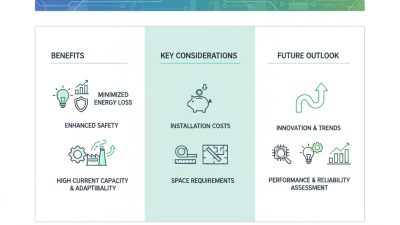
Busducts are becoming a vital component in modern energy management systems. They provide a reliable method for distributing electrical power efficiently. In many industrial and commercial settings, busducts replace traditional wiring systems, offering several advantages. Their design minimizes energy losses and enhances safety, critical factors for any facility.
The efficiency of busducts stems from their compact and modular design. They are easy to install and can be customized to meet specific energy needs. This adaptability allows facilities to scale their energy distribution without significant infrastructure changes. Maintenance is often simpler too, as busducts require fewer physical connections, reducing potential failure points.
While the benefits are clear, some challenges exist. Installation can be costly if not planned properly. Additionally, improper sizing can lead to inefficiencies. Engaging with professionals who understand busduct systems can mitigate these risks. Investing time in research and expert consultations can lead to better long-term solutions for energy management.
Top Distributor Busduct Types for Efficient Power Distribution Solutions
| Busduct Type |
Material |
Current Rating (A) |
Application |
Advantages |
| Standard Busduct |
Aluminum |
6000 |
Commercial Buildings |
Cost-effective, space-efficient |
| High-Current Busduct |
Copper |
5000 |
Industrial Facilities |
High conductivity, durability |
| Flexible Busduct |
Steel |
3000 |
Data Centers |
Adaptable design, easy installation |
| Vertical Busduct |
Aluminum |
4000 |
High-rise Buildings |
Space-saving, organized layout |
| Low Voltage Busduct |
Copper |
2000 |
Residential Applications |
Energy-efficient, affordable |
Factors to Consider When Selecting a Busduct Type
When selecting a busduct type, several key factors come into play. One important consideration is the electrical load requirements. Different busduct systems can handle varying capacities. Knowing the maximum current load is essential. This ensures safety and efficiency in power distribution.
Another factor to consider is the installation environment. Busducts must be tailored to fit industrial or commercial settings. For instance, corrosive atmospheres require materials with high resistance. The location can influence heat dissipation and accessibility for maintenance. Proper placement and selection can prevent long-term issues.
Additionally, evaluating the system's scalability is crucial. As operational demands grow, the busduct should adapt. Future expansions can be costly without a well-planned system. Think about potential upgrades and changes in capacity. Flexibility in design can save time and resources down the line.
Future Trends in Busduct Technology and Power Distribution Solutions
The future of busduct technology is evolving rapidly. Industry reports indicate that the global busduct market is projected to reach USD 12.64 billion by 2027, growing at a CAGR of 6.2% from 2020 to 2027. This increase is driven by the demand for efficient power distribution solutions in commercial and industrial sectors. Increased urbanization and infrastructure developments are key contributors to this trend.
As energy efficiency becomes paramount, the adoption of smart busducts is on the rise. These systems allow for real-time monitoring and management, enhancing operational efficiency. Recent studies suggest that integrating IoT-enabled features into busducts can reduce energy consumption by up to 15%. However, these technologies come with challenges. Initial costs and the need for skilled labor can slow down their adoption.
Sustainability is another critical factor shaping the future of busduct technology. With stricter environmental regulations, many manufacturers are focusing on eco-friendly materials and designs. A report showed that 30% of companies are now prioritizing green solutions when upgrading electrical systems. The shift might be gradual, but it is essential for long-term viability in power distribution.
Top Distributor Busduct Types for Efficient Power Distribution Solutions
This chart provides an overview of the market share of different types of busducts used in power distribution solutions, highlighting the growing preference for copper and aluminum types due to their efficiency and reliability.